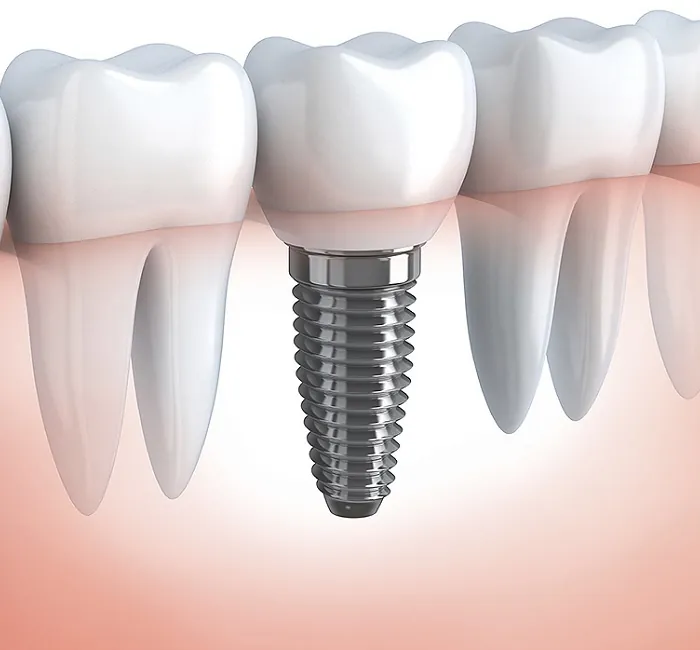
What Are Dental Implants
Dental implants are small titanium posts that are surgically placed into the jawbone to replace the root of a missing tooth. Once the implant integrates with the bone, it provides a stable foundation for a replacement tooth, bridge, or denture.
Implants are designed to function in a similar way to natural tooth roots, helping to preserve the jawbone and support the surrounding teeth. At our Croydon dental practice, your dentist will carry out a thorough assessment to determine whether implants are a suitable option for your situation.
- Designed to replace missing tooth roots and support restorations
- Made from biocompatible titanium that integrates with the jawbone
- Can support single crowns, bridges, or dentures
- Do not require alteration of adjacent healthy teeth
Book a dental implant consultation: call (03) 9725 8040 or book online. Our Croydon practice is open six days a week, Saturdays included, with parking on site.
The Implant Process
The dental implant process involves several stages and is typically completed over a period of months. Your dentist will explain each step in detail during your initial consultation.
- Assessment and planning: a comprehensive examination including X-rays or 3D scans to evaluate the jawbone, gum health, and overall suitability for implant placement
- Bone grafting (if required): in some cases, the jawbone may not have sufficient volume or density to support an implant, and a bone graft procedure may be needed before placement
- Surgical placement: the titanium implant is placed into the jawbone under local anaesthetic. In some cases, sedation options may be available
- Healing and osseointegration: the implant integrates with the surrounding bone over a period of typically three to six months
- Abutment placement: once integration is confirmed, a connecting piece (abutment) is attached to the implant
- Final restoration: a custom-made crown, bridge, or denture is fitted to the abutment, completing the process
The overall timeline varies between individuals depending on healing, bone quality, and whether any preparatory procedures are needed.
Single Implants and Implant-Supported Options
Single Tooth Implants
A single dental implant can replace one missing tooth without affecting the teeth on either side. The implant supports a custom-made crown that is designed to match the colour and shape of your natural teeth.
Implant-Supported Bridges
For patients missing several teeth in a row, implant-supported bridges provide an alternative to traditional bridges. Rather than relying on adjacent natural teeth for support, the bridge is anchored by two or more implants placed in the jawbone.
Implant-Supported Dentures
Implant-supported dentures are secured by implants placed in the jaw, providing a more stable alternative to conventional removable dentures. They may be fixed or removable, depending on the design and your individual needs.
- Improved stability compared to conventional dentures
- May help reduce bone loss in the jaw over time
- Can improve comfort and confidence when eating and speaking
- Various options available depending on the number of missing teeth and bone condition
Your dentist will discuss the different implant options with you and recommend an approach based on your individual circumstances. Contact our Croydon practice to arrange a consultation.
Related Reading
- Why implant quotes vary so much, and what you are actually paying for
- Dental implants compared with dentures
- How missing teeth affect daily life
- DVA implant funding rules for veterans
Frequently Asked Questions
How long does the dental implant process take?
Is dental implant surgery painful?
Am I a candidate for dental implants?
How long do dental implants last?
What happens if I don't have enough bone for an implant?
Can implants support dentures?
Dental Implants for DVA Veterans
DVA funds implants in defined circumstances with prior approval: two single tooth implants every two years where the tooth was lost within the past three years, two implants for a partial upper denture, or three for a full lower denture. Mini implants, block bone grafting and zygomatic implants are not funded.
DVA splits the treatment into two phases with different permitted providers. The surgical placement must be done by an oral and maxillofacial surgeon, oral surgeon or periodontist. The restorative phase may be completed by a general dentist for a single tooth implant or an incisor replaced with a pontic, so we can do that part here, while implants supporting a full lower or partial upper denture require a prosthodontist. See our DVA dentist page for the full breakdown.