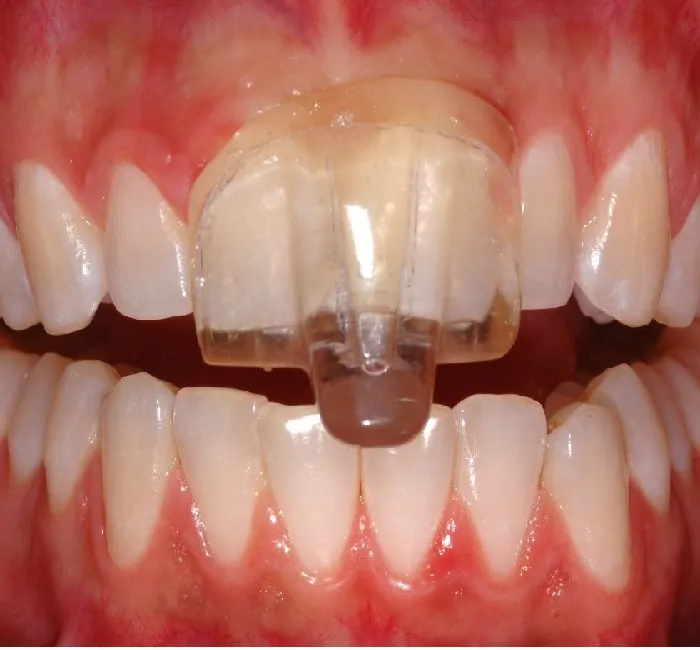
What Is Teeth Grinding (Bruxism)
Bruxism is the involuntary grinding or clenching of teeth, which most commonly occurs during sleep. Over time, persistent grinding can cause significant tooth wear, fractures, jaw pain, headaches, and muscle tenderness in the face and neck.
The causes of bruxism can vary and may include stress, anxiety, sleep disorders, or bite-related issues. Many people are unaware they grind their teeth until their dentist identifies signs of wear during a routine examination, or until symptoms such as jaw soreness or tooth sensitivity develop.
Book a splint consultation: call (03) 9725 8040 or book online. We are at 59 Wicklow Avenue, Croydon, two minutes from Croydon Station with parking on site.
Occlusal Splints for Bruxism
An occlusal splint, sometimes called a night guard, is a custom-made acrylic appliance worn over the teeth during sleep. The splint creates a protective barrier between the upper and lower teeth, reducing the damaging effects of grinding and clenching.
- Protects tooth surfaces: prevents further wear, chipping, and fractures caused by grinding forces
- May reduce jaw muscle tension: the splint can help distribute biting forces more evenly, which may ease muscle discomfort
- Custom-fitted: fabricated from accurate impressions of your teeth to ensure a comfortable and secure fit
- Typically worn on the upper teeth: designed to cover the upper arch, though lower splints may be used in some cases
- Durable acrylic material: made from hard-wearing acrylic designed for nightly use over an extended period
It is important to understand that an occlusal splint manages the effects of grinding rather than stopping the habit itself. Your dentist may also discuss contributing factors and other strategies that could help reduce grinding behaviour.
Getting Fitted for a Splint
The process of obtaining an occlusal splint begins with a dental examination at our Croydon practice, where your dentist will assess signs of grinding such as tooth wear patterns, enamel loss, and muscle tenderness.
- Dental examination: assessment of your teeth, jaw joints, and facial muscles to evaluate the extent of grinding
- Impressions or digital scan: accurate records of your teeth are taken so the splint can be fabricated to fit precisely
- Laboratory fabrication: your splint is custom-made by a dental laboratory from durable acrylic material
- Fitting appointment: the completed splint is tried in, and your dentist checks the fit, comfort, and bite contact
Adjustments may be needed after initial fitting to ensure the splint sits comfortably and your bite feels even. Regular review appointments at our Croydon practice allow your dentist to monitor tooth wear and check the condition of your splint. Splints should be replaced when they become worn or damaged to maintain their protective function.
Related Reading
- Signs you grind your teeth at night, and what a splint actually does
- Jaw clicking, morning headaches and worn teeth: what they mean
- Snoring and sleep apnoea: how your dentist can help
- Building up worn teeth
Where the jaw joint itself is involved rather than just the teeth, TMJ treatment covers the wider assessment.